

Vizrt Acquires Chyron, Expanding Reach in US and Regional Networks
On 12 November, Vizrt announced the completion of its acquisition of Chyron, one of the pioneers in the development of broadcast graphics technology.
The acquisition represents a significant shift in the broadcast technology landscape, bringing together two companies whose solutions have coexisted for many years within the production infrastructures of broadcasters, content producers and sports organisations.
Beyond commercial expansion, this acquisition raises important questions about how graphics, automation and live production systems could work together in the future.
What motivated this acquisition?
Strengthening its presence in North America and expanding within the sports production market are among Vizrt's key strategic motivations.
Chyron's expertise in stadiums and sports venues complements Vizrt's existing portfolio, creating opportunities for joint development in environments where graphics play a central role in the spectator experience.
The acquisition could also help reduce the technical complexity associated with deploying solutions from different manufacturers within the same production infrastructure.
What does this mean for existing customers?
One of the main concerns following an acquisition of this scale is the continuity of existing products, technical support and previous technology investments.
Vizrt has committed to supporting Chyron customers throughout the integration process, with the aim of maintaining the stability of their existing workflows. Decisions regarding future product development are also expected to take customer requirements into consideration.
Vizrt's perspective
Technological development should respect the systems customers rely on today while enabling them to adapt their operations to future requirements.
Rohit Nagarajan
CEO, Vizrt | Statement summary
In an interview with TV Tech, published on 23 November, Rohit Nagarajan explained that the companies' development teams are working together to assess areas of complementarity and overlap between their respective product portfolios.
A shared technology roadmap is expected to be presented during the first half of 2027, although the full details regarding the future of individual products have yet to be publicly defined.
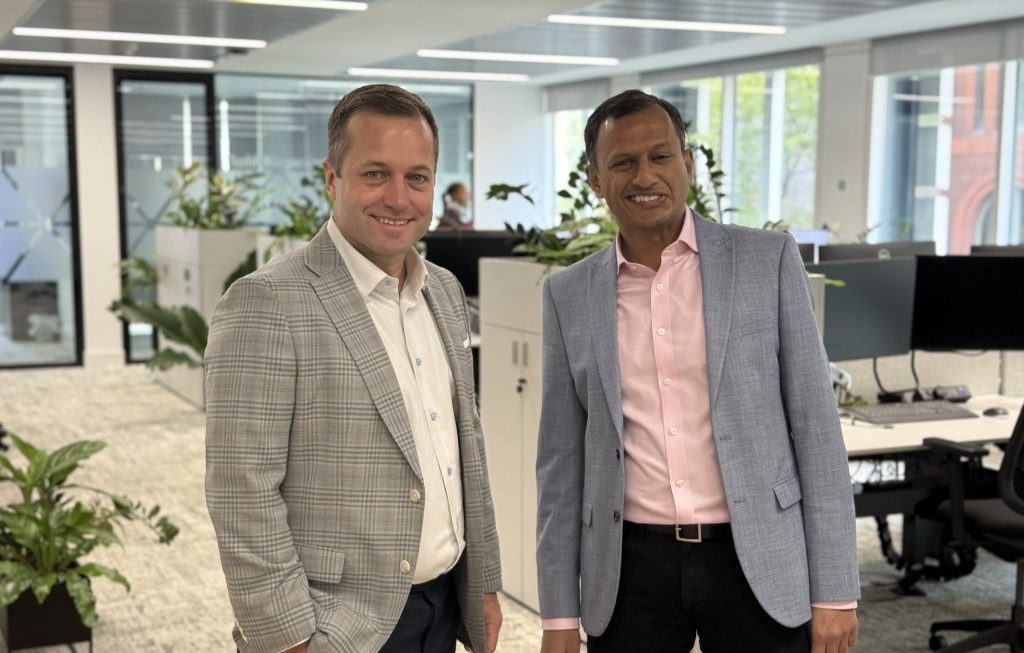
Mike Truex of Chyron (left) and Rohit Nagarajan, CEO of Vizrt (right). Image credit: Vizrt.
What technology integration opportunities could emerge?
One particularly interesting area for the future of both brands is the development of HTML5-based graphics.
Vizrt's CEO identified Viz Flowics, Chyron PRIME and Chyron LIVE as relevant solutions in this context, highlighting the potential for greater alignment between the technologies developed by both companies.
For broadcast professionals, this convergence could create new opportunities across several areas:
- Interoperability: reduced complexity when connecting graphics and production systems.
- HTML5 graphics: greater flexibility in the creation and distribution of graphical content across different production environments.
- Sports production: closer integration between content delivered through television broadcasts, digital platforms and in-venue displays.
- Automation: fewer repetitive tasks and manual processes associated with graphics production.
- Production infrastructure: opportunities to develop more integrated workflows while reducing the need for custom integrations.
These opportunities represent potential areas of development to monitor rather than features or integrations that have already been confirmed.
The role of artificial intelligence in the future of broadcast graphics
The growing adoption of artificial intelligence in audiovisual production is another relevant aspect of this acquisition.
In an environment where a single event can be distributed simultaneously across television, streaming platforms, social media and stadium displays, the ability to adapt graphical content to different audiences and formats is becoming increasingly important.
AI agents could help streamline this process by automating real-time information updates, adapting graphics to different languages and generating versions tailored to individual distribution channels.
The challenge will be to ensure that automation respects editorial standards, organisational brand guidelines and data accuracy, while keeping production professionals in control.
An industry perspective
Before deploying specialised AI agents, organisations should ensure data quality and establish appropriate governance mechanisms across their workflows.
Alex Holtz
Research Director, IDC | Analysis summary
GTC's perspective
As a technology partner of both Vizrt and Chyron, GTC is following these developments with particular interest, alongside the opportunities they may create for the Portuguese market.
For broadcasters and content producers, the value of this acquisition will depend on the ability to translate the complementary technologies of both brands into tangible operational benefits.
Beyond access to an expanded product portfolio, the key question is how these developments could simplify production workflows, reduce infrastructure complexity and protect existing technology investments.
GTC will continue to monitor developments announced by both manufacturers, supporting its customers in evaluating existing solutions and planning the future evolution of their production infrastructures.
Prepare your production infrastructure for the future
Explore the Vizrt and Chyron solutions available through GTC and discover how they can support your production workflows.
Vizrt solutions Chyron solutions